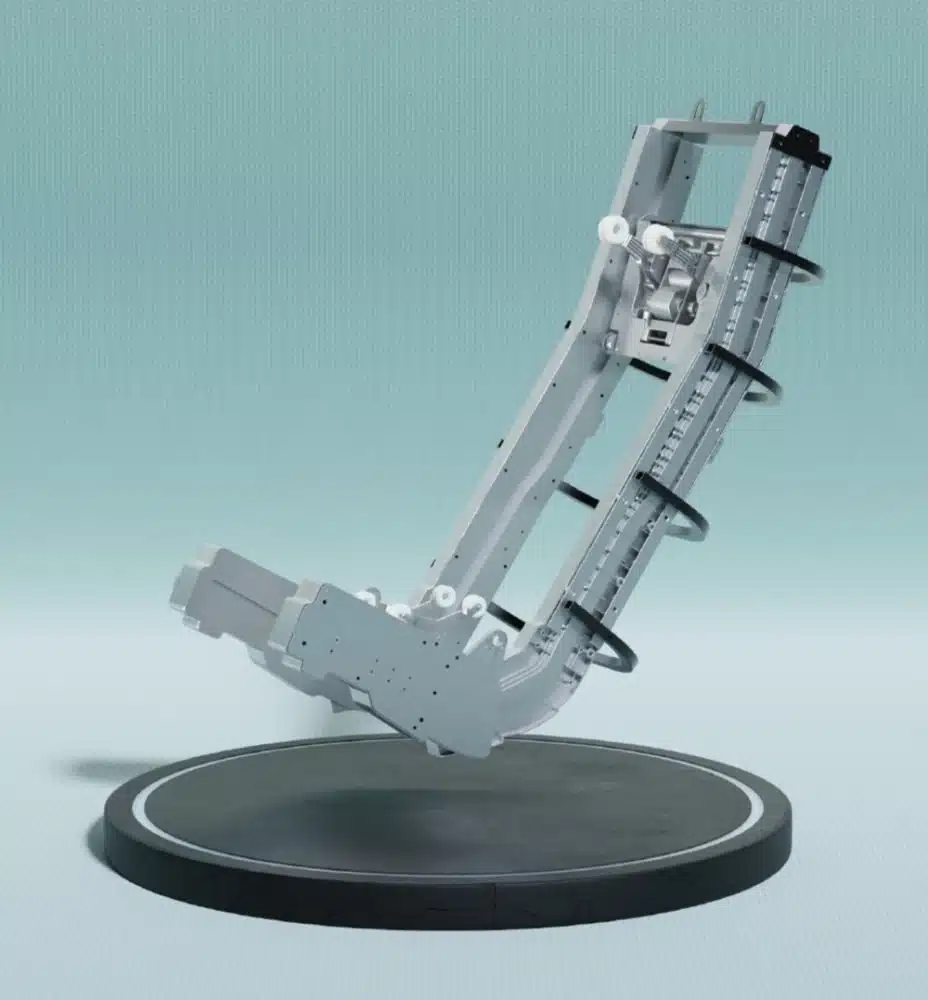
You may have heard the terms split track and flex track when shopping for a massage chair. In my opinion, they essentially refer to the same concept.
A traditional L-track runs from your neck, down your back, and underneath your glutes in one continuous piece.
With a split track, that L-track is divided into two sections—roughly the upper two-thirds and the lower one-third. At the point where the two sections meet, the chair incorporates a flexible hinge, typically made from a durable, high-strength plastic.
When the chair reclines, that hinge allows the L-track to flatten into a more horizontal position.
Why is that important?
Because as the track flattens, the chair can produce a much more effective stretch. It changes the angle of your body and allows the massage chair to create a deeper, more natural stretching motion than a traditional fixed L-track.
That’s the primary advantage of a split or flex track. By allowing the track to flex at the hinge, the chair can deliver a more comfortable stretch and a noticeably different massage experience.
So, if you hear the terms split track or flex track, they’re generally describing the same technology: an L-track with a flexible hinge that allows the track to flatten as the chair reclines.
Download my free report, 11 Things You Absolutely Need to Know Before You Even Consider Investing in a High-Quality Robotic Massage Chair. The link is in the caption.
Anyway, I hope you found this video helpful. I’m Dr. Alan Weidner from Massage Chair Relief, and I’ll see you in the next video. Bye-bye.