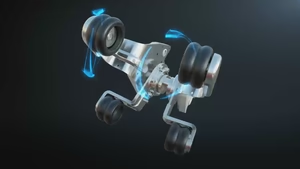
The other feature we’re starting to see more of is 5D. I’ve talked about this before. We have 2D, 3D, and 4D massage chairs, and now we have 5D chairs.
I don’t even want to get into the physics of the three-dimensional model, which is basically what our world is built around. But 4D, as you may or may not know, refers to the rollers changing rhythm and speed during a massage program. The rollers can move up and down, side to side, and forward and back, while the speed and rhythm can also change. That’s what we generally refer to as 4D.
Now we have 5D, where the rollers use sensors during the body scan to detect the tightness or tension in the muscles they’re massaging. That feedback is then sent back to the chair’s computer, which can adjust the rollers to accommodate changes in muscle tension.
These 5D chairs can make those adjustments throughout the entire massage. Muscle tension can change as the massage progresses, and ideally, that’s exactly what you want to happen.
The massage is designed to relax the muscles, break down scar tissue, and improve the range of motion of the spinal segments. As the muscles relax, the chair can detect those changes and adjust the roller pressure accordingly—either increasing or decreasing the intensity, depending on how the program is designed to respond.
Anyway, I hope you found this video helpful. I’m Dr. Alan Weidner from Massage Chair Relief, and I’ll see you in the next video. Bye-bye.